- Buy the Drip
- Posts
- What If We’ve Been Wrong About Coffee Defects?
What If We’ve Been Wrong About Coffee Defects?
From Huila to Zurich, researchers are dissecting coffee’s physical defects and what they find could change grading forever....

Buy the Drip w/ Dave & Cole
November 11, 2025 • Estimated Reading Time: 4 minutes
In partnership with


Grounding Green Grading in Sensory Science
What if we’ve been judging coffee by its looks instead of its flavor?
For over a century, coffee professionals have relied on their eyes to decide what makes a coffee “good.” Broken beans, insect bites, or black discoloration?
Defects. Remove them.
Clean, uniform, dense beans?
Specialty. Reward them!
This visual grading process….”known as green grading” has been central to how the industry defines and prices quality. But a growing group of scientists are asking a simple, interesting question…
Do these visible defects actually taste bad?
That’s the premise behind a new research project led by the Coffee Science Foundation (CSF) and Specialty Coffee Association (SCA), in partnership with the Zurich University of Applied Sciences (ZHAW) and CESURCAFÉ in Colombia. Together, they’re diving deep into how physical “defects” in green coffee influence what we actually smell and taste in the cup.
For decades, our grading standards have operated on tradition and assumption. “Current green grading guidelines are based on tradition, rather than on sensory science,” says Peter Giuliano, Executive Director of the Coffee Science Foundation. “This research allows us to build more informed standards.”
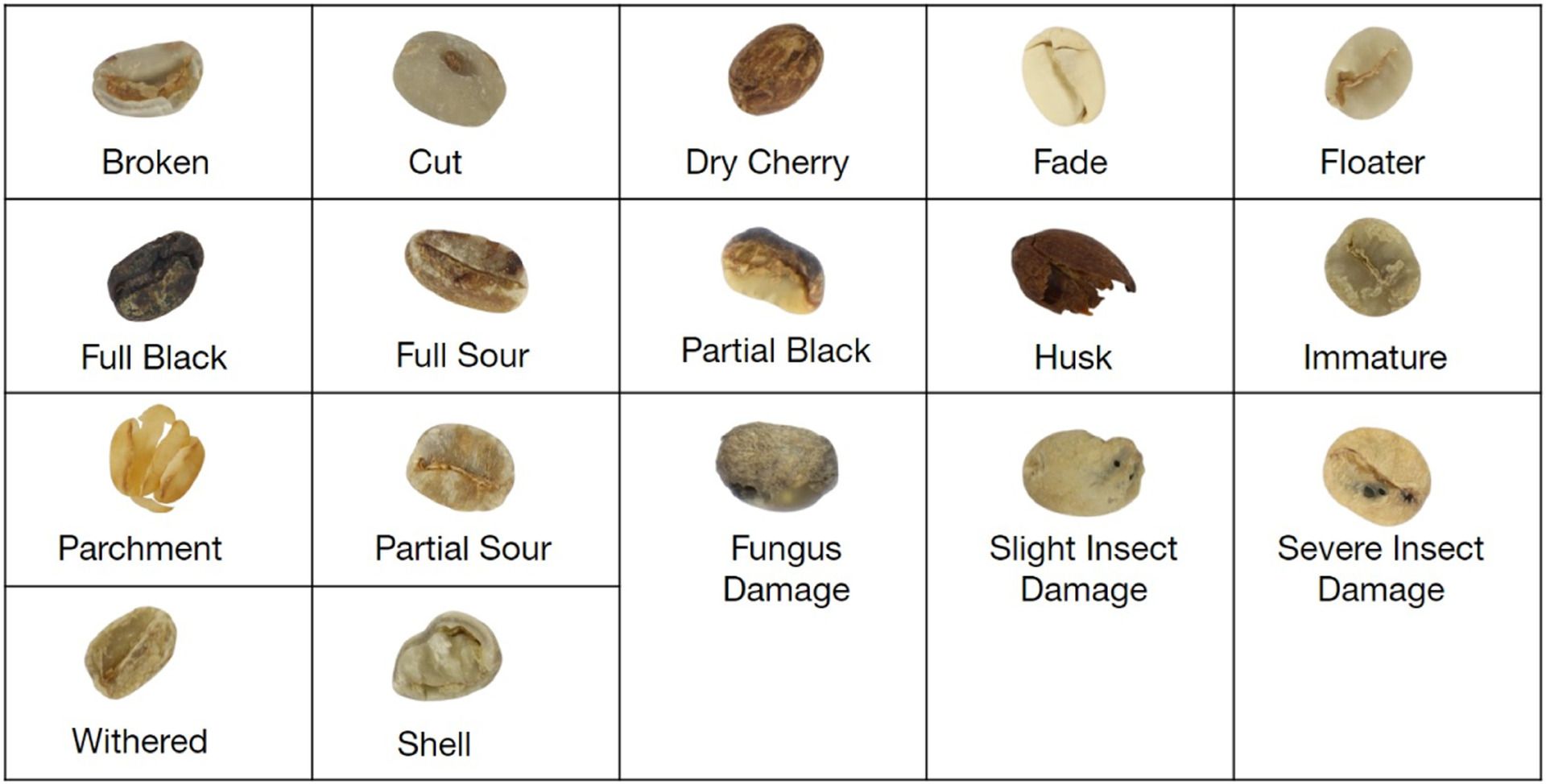
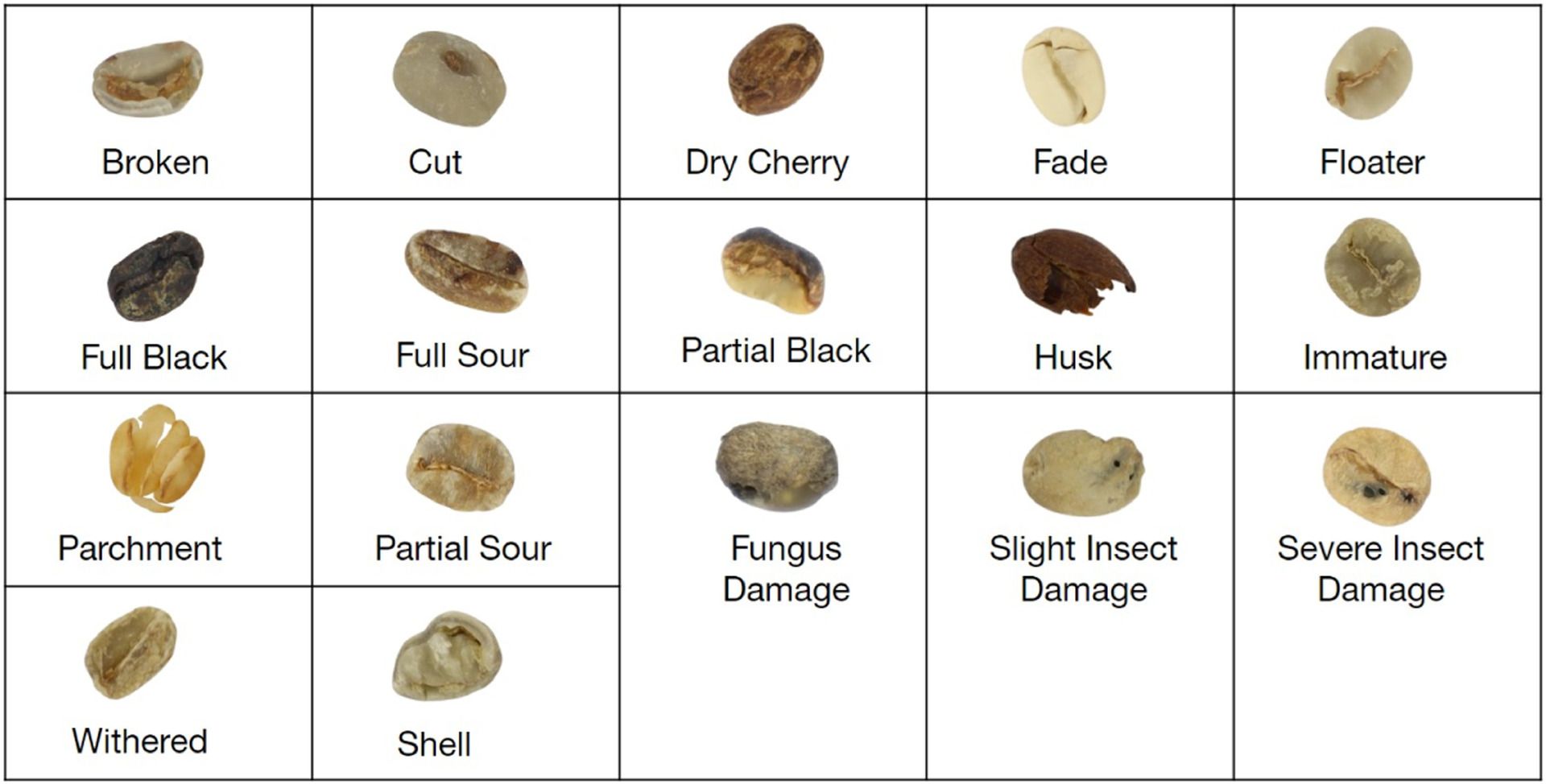
Green Bean Defects
Seeking the Defects
To answer that question the research teams are doing the opposite of what most coffee professionals are trained to do….they’re looking for defects and keeping them.
The CESURCAFÉ team in southern Huila, Colombia, led by Professor Nelson Gutiérrez Guzmán and Nicolás Tovar Jacobo, spent weeks hand-sorting pasilla coffees (lots typically full of visual imperfections) to isolate 12 types of defective beans.
Each 500g sample was sorted by defect type….
black beans / sour beans / insect-damaged / broken / and more
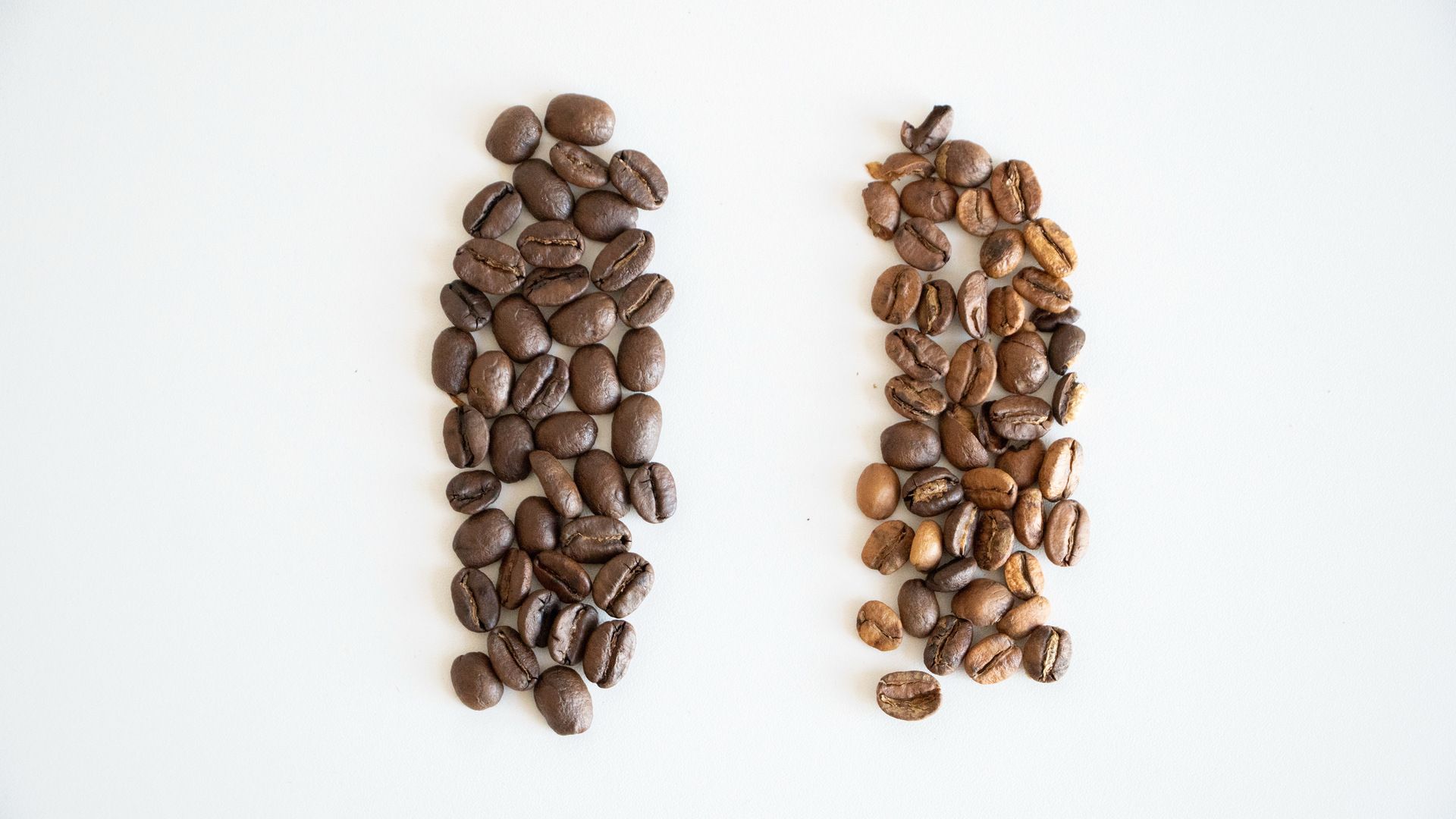
and roasted using a standardized medium profile identical to a clean “reference” coffee from the same region. Then, those defects were spiked back into the clean coffee in precise ratios from 1.6% to 50% and put through rigorous sensory testing.
Tasting the Threshold
At the Coffee Excellence Center at ZHAW, a trained sensory panel used a two-step approach..
First, descriptive analysis where cuppers calibrated their senses to identify each defect and its flavor character at various concentrations.
Then, triangle testing, where three cups were presented two clean, one spiked and the tasters had to find the odd one out.
The purpose? To pinpoint the exact threshold where a defect becomes perceptible.
For example a defect can’t be consistently detected below 5–8% concentration, that raises a tough question…
should coffee with 2% defects really be downgraded or rejected entirely?
It’s a radical rethinking of what defines “quality.” Instead of counting visible imperfections, we could soon be measuring sensory impact basing classification on data, not dogma.
Turning Smell Into Data
The sensory work is only half of it. The scientists are also breaking down defects chemically using gas chromatography–mass spectrometry (GC-MS) a method that separates and identifies individual aroma compounds and gas chromatography–olfactometry (GC-O)…. which literally lets researchers smell each separated compound.
This combination of science and sensory work gives unprecedented insight into what specific molecules cause off-flavors like phenolic, sour, or earthy notes and at what levels they become noticeable.
The team is even screening for toxins like ochratoxin, to determine whether certain physical defects pose any real health risk.
“Identifying defects isn’t always a black-and-white process,” says Dr. Sebastian Opitz, green coffee expert and project lead at ZHAW. “Some defects punished heavily in grading may not produce any detectable flavor differences in the cup.”
Why It Matters
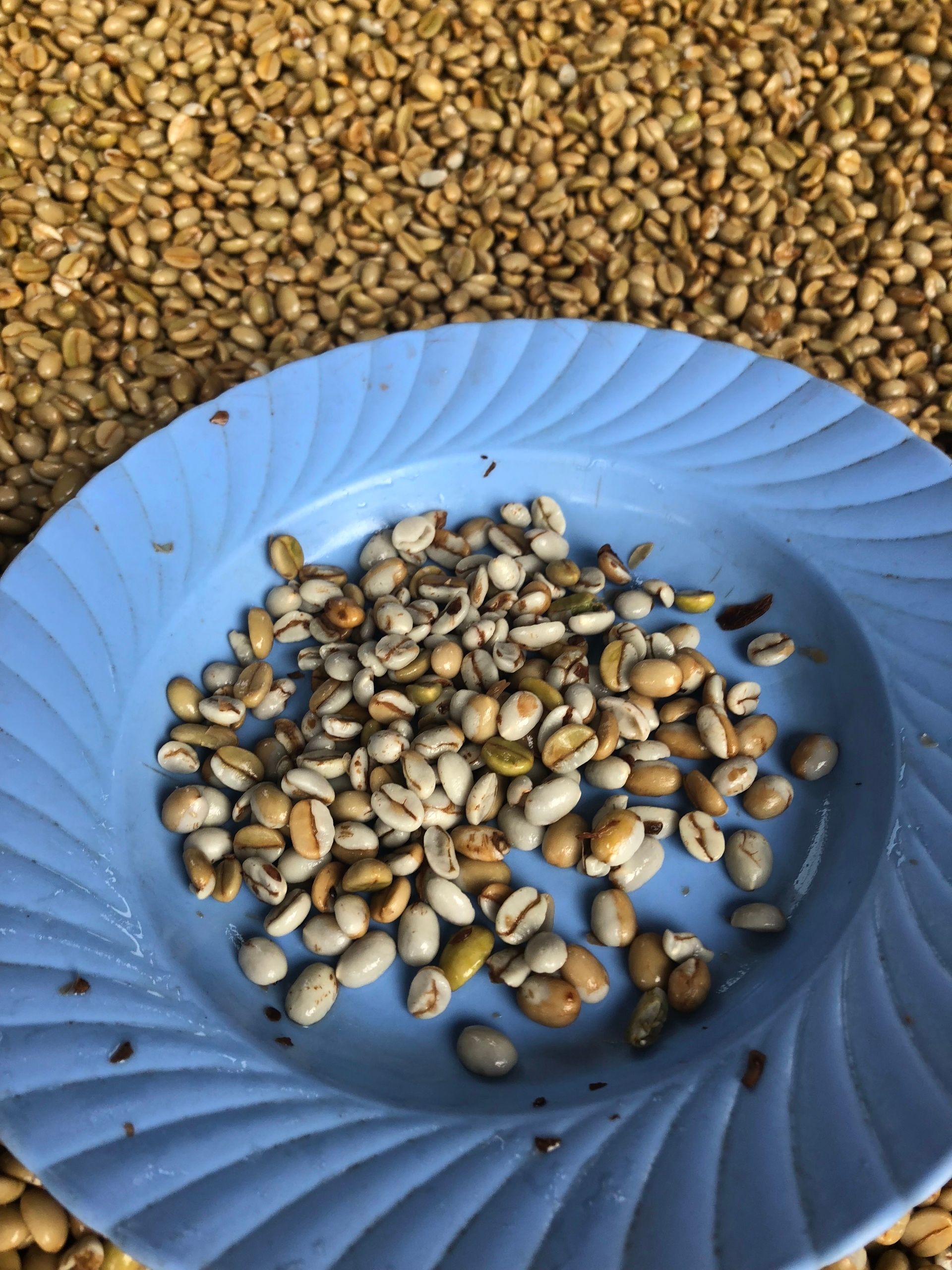
If the research shows that certain defects don’t noticeably impact flavor or only do so beyond specific thresholds it could reshape the entire coffee value chain.
That means less waste, fairer pay for producers, and a shift away from purely aesthetic grading systems that penalize farmers for imperfections they often can’t control.
It would also align with the SCA’s evolving Coffee Value Assessment (CVA), which aims to measure coffee by its full range of attributes rather than a simple pass/fail “specialty” threshold.
The project’s implications ripple far beyond cupping tables:
For producers, it challenges the high cost of sorting out defects that may not affect sensory quality.
For roasters, it could broaden access to coffees with unique character that are currently overlooked.
For buyers and Q graders, it’s a reminder that “uniformity” isn’t always the same as “quality.”
If you click this ad below, it truely helps us build our platform here at Buy the Drip and further our ability to create content that you’ll love, weekly.
100 Genius Side Hustle Ideas

Don't wait. Sign up for The Hustle to unlock our side hustle database. Unlike generic "start a blog" advice, we've curated 100 actual business ideas with real earning potential, startup costs, and time requirements. Join 1.5M professionals getting smarter about business daily and launch your next money-making venture.

The Financial Reality
The Bigger Shift: From Tradition to Evidence and Economics
This isn’t just a scientific shift ….it’s an economic one.
Producers have been forced to spend time and money removing beans that look imperfect, even when they taste identical in the cup (well some would say this does impact the final cup). Every defect sorted out is potential revenue lost, every rejected lot a hit to the farmer’s bottom line.
Now, the SCA and Coffee Science Foundation are rebuilding those rules from the ground up and linking sensory data, chemistry, and real value creation.
Alongside this work, other projects are unpacking how sweetness is perceived (Ohio State University), how roast color impacts consistency (UC Davis), and even how cuppers evaluate coffee.
Together, these studies represent a larger shift: from inherited wisdom to measurable return.
From grading by habit to grading by data.
It’s not about dismantling specialty ….They haven’t declared which defects to remove (or not) but they’re building the science to finally know instead of guess.
The momentum points toward a future where we remove defects that affect taste not just looks.

a weekly highlight of content that we’re fascinated to share
Reading: Bloom by Mikael Jasin, written by Tigger Chaturabul
Just finishing this one and it’s excellent! Mikael’s story digs into what it really takes to grow through competition, business, and identity. It’s personal, sharp, and full of lessons for anyone who cares about the barista craft. I learned a lot about Miki and about myself…and you will too
Watching: In this week’s Buy The Drip episode, we sit down with Ben Put. A veteran of the competition world (7 time Canadian Champ!) to talk about what it takes to stay at the top, roasting for Best of Panama, and the mindset behind building Monogram Coffee.
Listening: A brilliant episode from James Harper exploring how we assign value in coffee and whether the systems we’ve built really serve the people who grow it. It’s storytelling meets economics, and it ties perfectly into this week’s theme.
Brewing: Back home this week and testing out a new brewer something simple but smart that keeps heat locked in. Early impressions are promising… more on this soon!

a weekly shoutout of epic brew bars, be it real life at your home or business, or wherever your imagination takes you.

our open accountability structure related to personal, physical or business growth
Distance: Buy the Drip run club. Clocking some kilometers. Help us push a few more kilometers through this week?
Want to join us as we hit the road? Let’s connect on Strava! or, join our Whoop group - just respond to the email and let’s grind together!
Reply